Security vision.
This page outlines the architecture and certification standards we are aiming for at launch. Independent audits will be conducted by top-tier security firms to prove, beyond any doubt, that no one at Leganovo can access your vault. Ever. Our source code will also be released as open source so every mechanism described here can be independently verified.
Zero-Knowledge Encryption Architecture
Built for Absolute Privacy. Engineered for Institutional Trust.
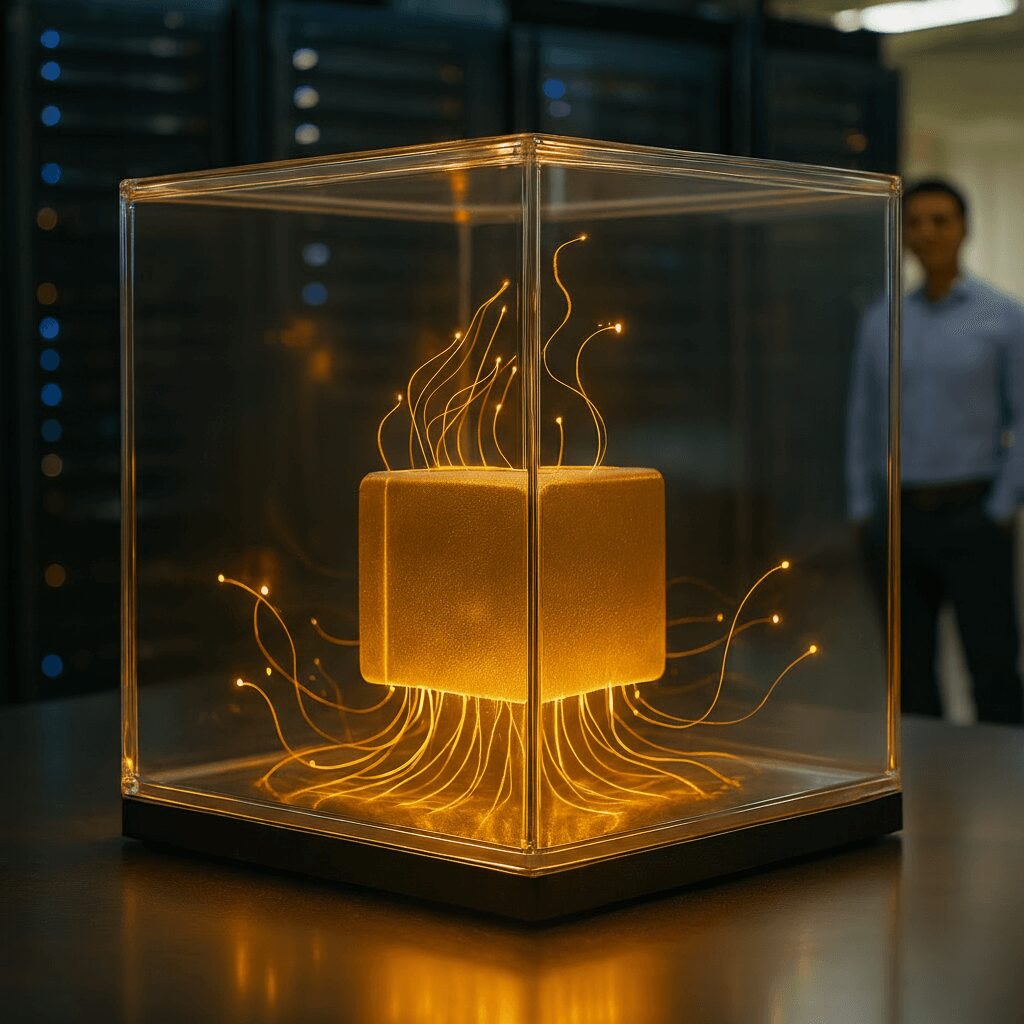
Leganovo was designed to achieve what traditional cloud and blockchain systems have not: true user sovereignty over digital identity and data. Leganovo’s zero-knowledge architecture is designed so that we do not hold encryption keys to user vaults. Only you and your authorized recipients can decrypt your content. Leganovo can verify authenticity without accessing the underlying information. This design goes beyond compliance. It represents a philosophical and engineering commitment to a new paradigm of trust.
Our Security Commitments
1. Core Principle: Knowledge Without Access
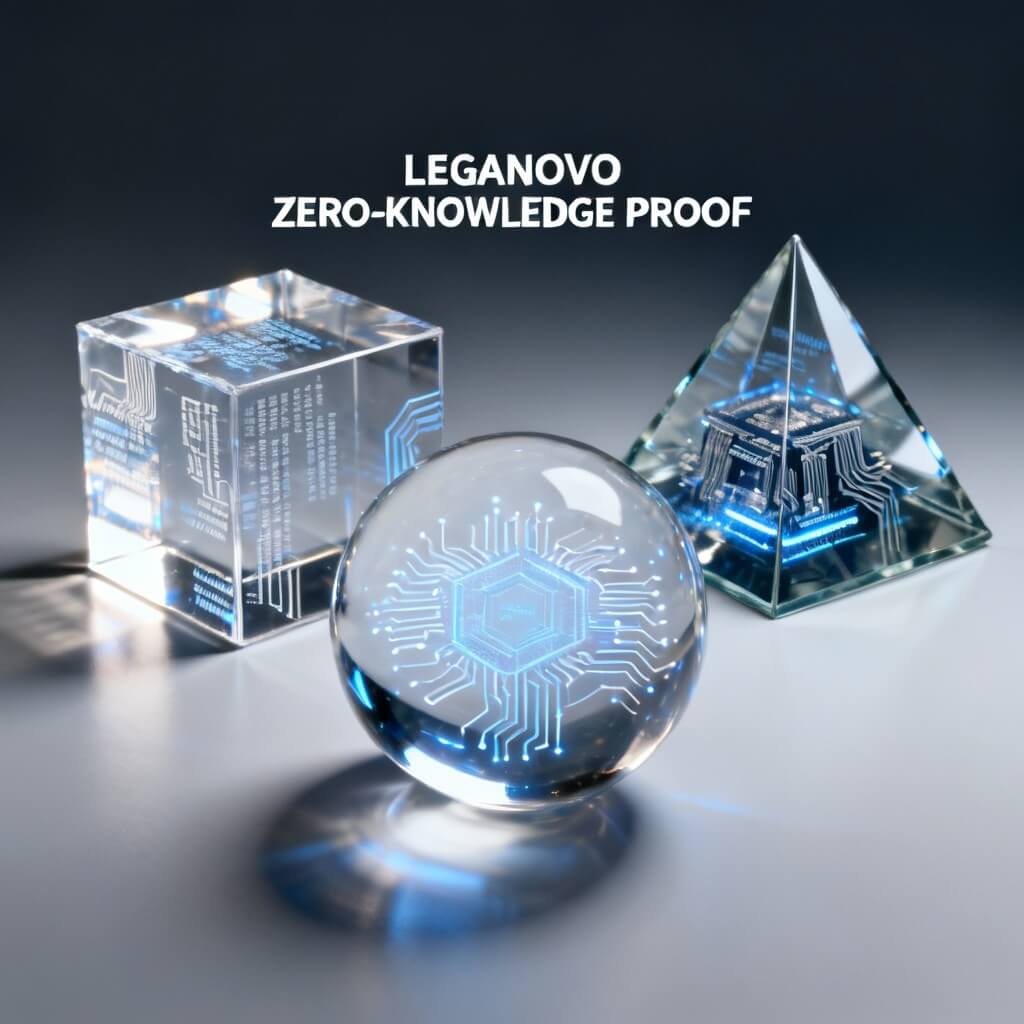
The cornerstone of Leganovo’s security model is Zero-Knowledge Proof (ZKP). ZKP allows the system to verify authenticity and ownership without revealing underlying information. This ensures that verification processes such as login, document certification, or identity checks can occur without exposing the actual content of user data.
Traditional systems rely on centralized access keys or administrator privileges. Leganovo eliminates these entirely. Every encryption key is user-generated, stored locally, and never transmitted in plain form. Authentication events are cryptographically validated across distributed nodes, guaranteeing that no single party ever holds full access.
2. Multi-Layer Encryption Stack
Leganovo uses a multi-tiered encryption structure built for both quantum resistance and enterprise interoperability:
- Layer 1: Client-Side AES-256 Encryption – All user data is encrypted before it ever leaves the device using the Advanced Encryption Standard (AES-256). Keys are derived from a one-way hash of user credentials and additional entropy elements generated by the device hardware.
- Layer 2: Distributed Fragmentation & Sharding – Encrypted data is divided into fragments and distributed across independent storage nodes. Each fragment is meaningless on its own; only the correct combination of encrypted keys can reassemble it.
- Layer 3: Asymmetric Key Exchange (RSA-4096 + ECC) – User keys are never transmitted directly. Instead, ephemeral session keys are created using RSA-4096 and elliptic-curve cryptography (ECC) for lightweight but secure exchange.
- Layer 4: Hash Integrity Verification (SHA-3) – Every data transaction is sealed with a SHA-3 hash fingerprint. This ensures integrity validation at the block and object levels, protecting against tampering even within internal nodes.


3. Zero-Knowledge Access Management
Leganovo’s zero-knowledge architecture means no administrator or third party can view, decrypt, or retrieve private user data.
Access to any vault or document is controlled by a split-key authorization model:
- The user holds the primary private key.
- Leganovo’s verification engine holds only a mathematical verifier, a non-reversible proof structure used to confirm legitimacy without exposure.
- No unified key exists anywhere within the system, ensuring total immunity to internal breaches.
Leganovo’s architecture is designed to minimize data exposure. In the event of lawful requests, our response is limited by the technical reality that encryption keys are user-held. We comply with applicable law.
4. Compliance and Institutional Grade Design
The Leganovo infrastructure was designed to meet and exceed international security and compliance standards:
- GDPR (EU) – Full data portability and right-to-erasure compliance.
- SOC 2 Type II – Continuous auditing for operational security.
- ISO/IEC 27001 – Certified management controls for information security.
- BIS Basel III Alignment – Structurally compatible with digital asset custodial frameworks.
Encryption modules are auditable by independent cryptographic examiners, with full logging at the verification layer but zero content visibility. The platform’s design ensures it can be deployed by regulated financial institutions, legal entities, and government frameworks requiring provable data sovereignty.


5. Quantum-Resilient Future
Leganovo anticipates the next era of cryptography. Its architecture is quantum-adaptive, prepared for migration toward lattice-based and post-quantum encryption schemes. Keys and hashes are dynamically upgradeable, allowing continuous evolution as computational paradigms shift. This proactive approach ensures that digital assets, legal documents, and identity vaults stored today remain secure for decades to come.
6. Ethical Encryption
Leganovo’s encryption design is not merely a technological achievement. It is an ethical stance. It rejects the trade-off between convenience and privacy that defines most of today’s digital systems. Instead, it guarantees that trust is mathematically enforced, not institutionally assumed.
Users own their data. Institutions can verify what’s necessary, but never see more than they are meant to. No advertising, no surveillance, no backdoors.
7. Assurance Layer and Transparency
To reinforce institutional confidence, Leganovo implements:
- Immutable audit trails for every access event, stored separately from user data.
- Independent key-verification logs, allowing third-party auditors to confirm the functioning of zero-knowledge protocols.
- Encrypted system telemetry, proving uptime and process integrity without compromising confidentiality.
Transparency is achieved through cryptographic proofs, not public exposure.
8. The Result: Absolute Digital Sovereignty
Leganovo’s Zero-Knowledge Encryption Architecture delivers the highest form of trust in a connected world.
One where privacy and compliance are no longer opposites. It empowers users, institutions, and enterprises to interact securely while preserving individual control. Every document, every vault, every byte encrypted, validated, and owned by its rightful holder. That is the Leganovo standard.
Resource Downlaod
Downloads & Technical Resources
Security Overview
Get a full breakdown of our encryption, delivery mechanism, and legal verification process.
Compliance & Privacy Whitepaper
Understand how Leganovo meets and exceeds privacy expectations under global data regulations.
Trusted by Clients Who Cannot Afford Mistakes